Let’s explore the common challenges manufacturers can face when producing powdered beverages and how to deal with them!
Introduction
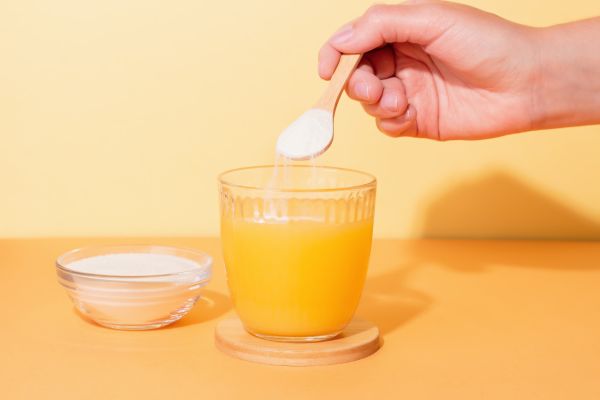
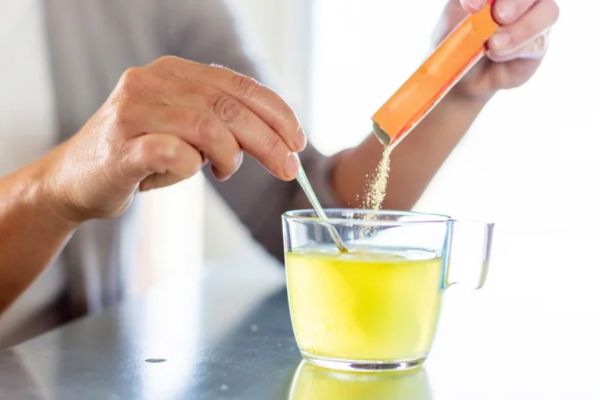
Powdered beverages, also called ready-to-mix beverages, have emerged and grown rapidly in recent years. They are popular and favored thanks to their convenience and diverse flavors and options, such as instant tea, flavored drink mixes, protein powders, and nutritional supplements. Consumers can easily prepare it by adding water and stirring well to dissolve. So, if you want to join this potential market, continue reading to understand the common difficulties when producing this type of beverage.
Powder components and characteristics
Powdered beverages, such as instant tea, powdered energy drink mixes, juices, and fruit drinks, often contain diverse components. Many raw materials have different sizes and flowability features. Before being blended, manufacturers need to study carefully the properties and characteristics of each ingredient.
The characteristics of final products are significantly impacted by the external environmental conditions in the manufacturing plants. For example in sugar-sweetened products, the humidity level will be a crucial factor as it may directly affect the sugar ingredient. High humidity can cause sugar caking and lumpiness, which dramatically influence the mixing time, order of addition of ingredients, the flowability, and the final product’s shelf life.
Powder raw materials can also be classified into free-flowing and cohesive categories based on flowability level. Granulated sugar is one example of a free-flowing powder with a smooth flow, a pleasing appearance, and minimal stickiness to the vessels and containers. Meanwhile, cohesive powders, like flour, can easily adhere to the machine wall and have an unpredictable stick-slip flow. In addition, some powder ingredients might segregate while producing and transporting, causing challenges to manufacturers.
Common challenges in manufacturing powdered beverages
Inconsistent blend uniformity
Inconsistent blends may impact final products’ efficacy, taste, and performance. For perfect consistency, manufacturers need to ensure that larger particles do not sink down while lighter ones do not fly off while blending. Particle size differentiation is the main reason for inconsistent blend uniformity. Each component has a natural size, which can lead to uneven distribution during blending. As a result, methods to balance the ingredient size are important to achieve consistency in every product. For example, at FGC, we grind dried sugar, flavorings, and additives to turn large granules into fine powder. Then, they are passed through a screening machine to ensure uniform size.
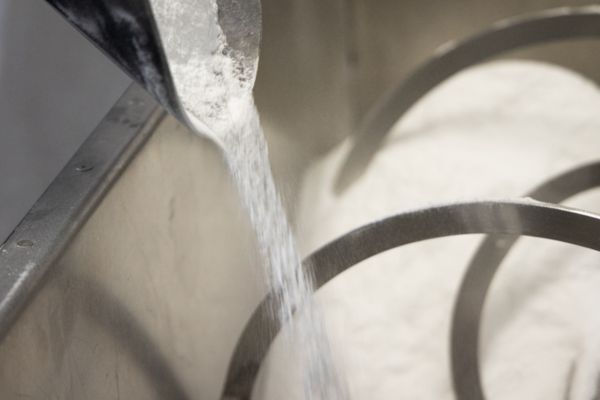
Not only particle size but differences in shape and density also affect the blending uniformity. At FGC, after ensuring that the ingredients are uniform in size, we use a high-speed mixer to mix the materials evenly before packaging. Mixing time and speed need to be calculated properly because over-mixing might break down and degrade sensitive materials while under-mixing results in inconsistent outcomes. Manufacturers can optimize those mixing parameters via testing and validation.
Another cause of inconsistent uniformity could be improper fill levels of powder ingredients in the blender. Inadequate fill levels can hinder the homogeneity, prolong the mixing process, or cause undesirable chemical reactions. The working volume, which will vary depending on the shape and size of the mixing machine, is typically about half of the total internal volume.

Segregation after mixing
Mixes containing powdered and coarse particles with different shapes, sizes, and densities can segregate during manufacturing and transportation. The distinct particle mobility in the bulk state during handling, transportation, or storage can cause this segregation. When the product is delivered to the customer, this issue can negatively affect the product quality and customer experience.
To minimize segregation, manufacturers can try to reduce drop heights and handling steps. Besides, with easy-to-segregate ingredients, a specially designed storage might be necessary. If required, they should consider a continuous blending system.
Ingredient solubility, flowability, and sensitivity
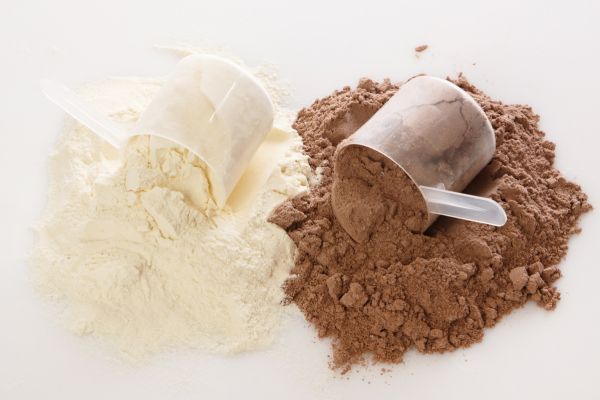
Because powdered beverages are consumed by dissolving them in water, ingredient solubility is a critical factor to consider when formulating and blending. Certain materials might have poor solubility and are hard to mix in water. To enhance their solubility, manufacturers need to process or combine them with other ingredients that can suspend them in water.
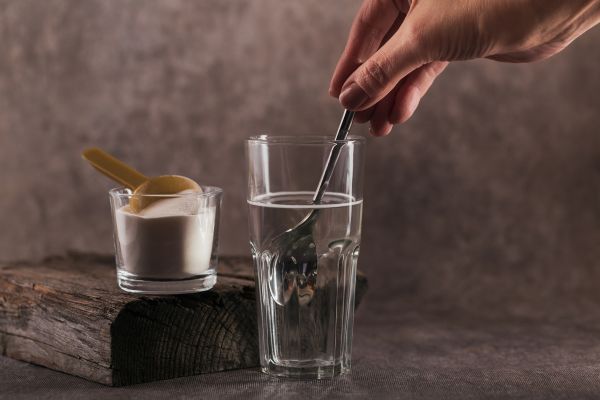
Additionally, one of the most significant and widespread problems in blending powder is flowability. Cohesive or moisture-sensitive powders in bulk may clump together or stick to the surfaces of machinery. This can result in buildup inside tubes or vessels, which stops the ingredient mixture from falling to the bottom. To deal with this problem, manufacturers should apply flow aids, install vibration systems, and design hoppers to push mass flow.
Moreover, some materials are sensitive to heat, moisture, or shear. If no measures are taken, mixing in large quantities can cause functional loss, reduced flavor, nutritional volume, and active properties. As a result, manufacturers need to ensure proper environmental factors such as humidity and temperature before blending. Besides, they should adjust the mixing speed and techniques to ensure product quality.
Cross-contamination
Keeping the appropriate level of cleanliness is crucial in avoiding cross-contamination and ensuring product safety. Contamination can result from residual materials from previous batches or inadequate cleaning. Therefore, systems that handle components prone to sticking to surfaces need to be cleaned regularly. The application of a proper cleaning-in-place (CIP) system is essential. Besides, it is important to pay attention to transporting raw materials to the mixer.
Conclusion
Manufacturers might encounter problems like inconsistent blend uniformity, segregation, ingredient solubility, flowability, sensitivity, and cross-contamination during powdered beverage production. Understanding the typical challenges and taking proactive measures to solve them can help guarantee a uniform level of product quality, lessen waste, and boost production efficiency. If you need any consultancy, feel free to contact us.
About Future Generation Co.,Ltd
Future Generation Company Limited is one of the largest beverage suppliers in Vietnam, with more than 30 years of experience in production and export. FGC is equipped with modern machines such as Hotfill PET and TetraPak, ensuring high-capacity production. FGC strives to achieve our mission to become Vietnam’s leading healthy beverage company. Our factories also meet international standards such as ISO, HACCP, etc. In addition, we constantly innovate our machinery system, strengthen production capacity, and increase productivity.
FGC also provides Private Label Services. With this service, we can help customers in researching and formulating beverages, designing product label packaging, and creating their own brands. This is an ideal solution for small and medium enterprises. Moreover, FGC provides free samples for customers to test before bulk orders. We also ensure delivery as fast as possible.
Contact
Address: R4 building, Office Quarter 02, Royal City, 72A Nguyen Trai St., Thanh Xuan Dist., Hanoi.
Phone: +84 24 73 000 125/ +84 24 73 063 369
Mail: info@vietnam-tea.com
Website: https://oem-fgc.com/ – https://vietnam-tea.com/
Facebook: https://www.facebook.com/fgcvietnamtea