Discover essential sterilization methods in aseptic technology. Learn how to keep packaging and production environments sterile to ensure safe, preservative-free products.
Introduction
In the food and beverage industry, aseptic technology has become a leading method for ensuring products are safe and shelf-stable without preservatives. At its core, aseptic processing involves the independent sterilization of the product and packaging materials, followed by their combination in a sterile environment. This article will explore the critical role of sterilization in aseptic technology, focusing on methods for sterilizing packaging materials and maintaining a sterile environment throughout production.
1. The importance of sterilization in Aseptic technology
Aseptic technology is characterized by a completely sterile production environment, where the sterilized product is packaged in sterile packaging. A key component of the Aseptic process is that the filling and packaging process will be performed in a completely sterile environment, preventing the risk of harmful microorganisms to damage the product or endanger the health of consumers. Thus, sterilization serves as the backbone of aseptic production, ensuring food safety, quality, and sustainability.
- Product safety: Effective sterilization eliminates pathogenic microorganisms that could harm consumers, ensuring product safety throughout its shelf life.
- Quality maintenance: Proper sterilization will prevent spoilage organisms from affecting product quality, maintaining properties and nutritional value for the expected time.
In Aseptic packaging technology, maintaining the sterility of a product relies heavily on two key factors: its packaging and the surrounding environment. Even if a product has undergone sterilization, any lapse in the sterility of its packaging or the environment is a favorable condition for bacteria to enter, causing the product to become infected again. Therefore, it is important to ensure that everything that comes into contact with the product is disinfected. Let’s take a look at some common methods to sterilize packaging and maintain a sterile environment during the Aseptic process.
2. Sterilization method for packaging materials
Product packaging sterilization in aseptic technology is applied to the inside of the packaging, the surface that contacts directly with the product, to prevent harmful bacteria from entering the product. The most commonly used chemical for this purpose is hydrogen peroxide (H2O2). To ensure the absolute safety of the products, after the sterilization process, chemical residue will be removed to prevent the risk of contaminating the product. The selection of appropriate sterilization methods for packaging materials depends on various factors, including the material type, production speed requirements, and specific product characteristics.
Spray application
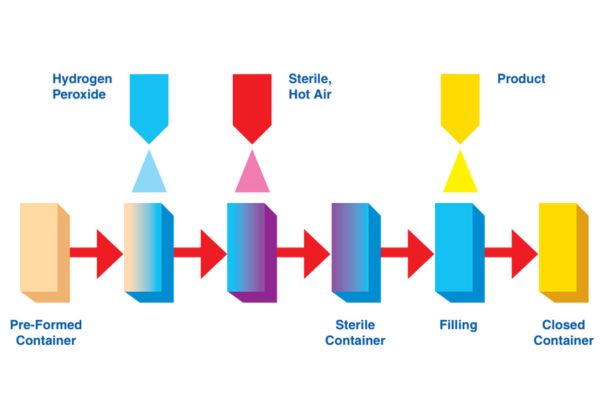
The spraying (“fogging”) of hydrogen peroxide is a popular method used in some Aseptic packaging systems that use pre-formed containers. To sterilize the packaging, a specific amount of H2O2 is sprayed into each container (positioned vertically) through a nozzle. It is important that the entire surface of the packaging, which is in contact with products, is covered with the spray solution to ensure effective sterilization.
Next, the hot sterile air (about 180°C) is blown into the container, elevating the temperature to the optimal level for effective sterilization. Besides enhancing the sterilization process, this hot sterile air thoroughly eliminates any residual hydrogen peroxide from the product packaging, ensuring that no chemicals remain and adhere to the product. This process using low concentrations of hydrogen peroxide will effectively eliminate most microorganisms within the container, ensuring it is safe to fill sterilized products into.
Application by vapor
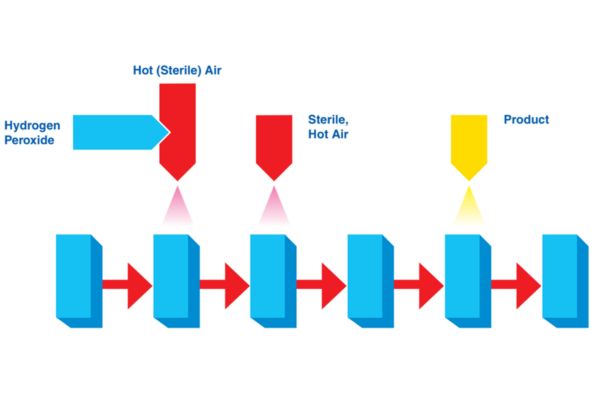
With the H2O2 vapor method, instead of H2O2 being sprayed into the container first and hot air blown later like in spray application. Here, H2O2 will be injected into hot sterile air. Liquid hydrogen peroxide is injected into a stream of hot sterile air and blown into each box to sterilize the inside surface that comes into contact with the product. Once applied, the H2O2 vaporizes and condenses on these surfaces, helping to kill harmful bacteria. Finally, hot air is blown into the container to heat and evaporate H2O2, ensuring no residue is left on the packaging. This process makes sure that the packaging is completely safe for use.
Application by roller system
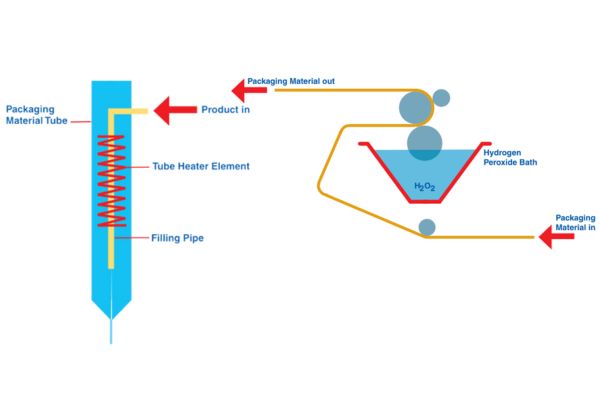
In aseptic technology, sterilization using a roller system is ideally suited for flat packaging, which is subsequently folded and sealed into a container. This system consists of a hydrogen peroxide bath, a flow of packaging material, and rollers. The roller will rotate through the liquid H2O2 tank, and then make contact with the surface of the packaging that covers the product. This interaction will effectively apply a layer of H2O2 onto the surface, ensuring thorough sterilization. After the application of the sterilant onto the food contact surface, the flat packaging material is formed into a tube and sealed vertically.
To achieve effective sterilization, the hydrogen peroxide covering the packaging surface must be at a high temperature. The sealed paper tube will be guided through an electrical element known as a “tube heater”. This device will elevate the temperature to 105-110 °C, ensuring proper sterilization. At the same time, the heat evaporates H2O2 and thoroughly removes any remaining traces on surfaces in contact with the product.
Use of an immersion bath
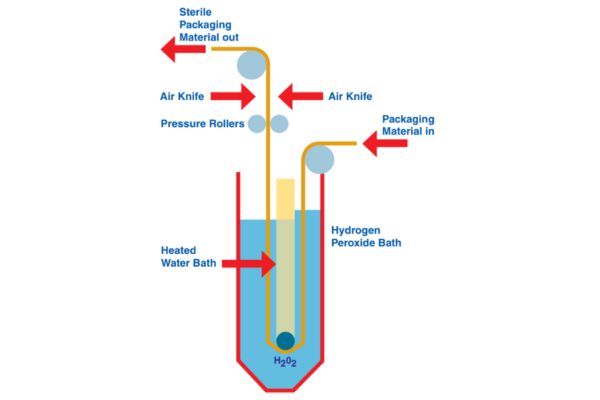
Like a roller system, the use of a hydrogen peroxide bath permits the sterilization of flat packaging material before the actual forming of the container. The packaging material is sterilized by passing it through a tank of liquid hydrogen peroxide. Liquid H2O2 is heated by immersing a high-temperature water bath within the H2O2 tank. The packaging material will be exposed to a 70 °C hydrogen peroxide tank for 10 seconds. This temperature ensures the elimination of bacteria and the attainment of optimal sterilization results.
After that, the hydrogen peroxide is removed from the packaging material by using pressure rollers and air knives. When exiting the H2O2 tank, the packaging passes through a pair of pressure rollers that force the remaining chemicals back into the tank. A pair of air knives then deliver a stream of hot air, sterilizing both sides of the packaging material. Finally, the sterile packaging will be shaped and sealed into a product container.
The immersion tank method stands as the leading modern sterilization technique for product packaging, and it is employed by FGC in our beverage production line. This innovative method ensures thorough sterilization of both sides of the packaging, with the side in direct contact with the product receiving a dual treatment of hydrogen peroxide and hot air. This process enhances effectiveness while significantly improving product safety compared to other sterilization methods.
3. Sterile environment
After sterilizing the product and packaging, there is still a risk of contamination from the environment. Therefore, in aseptic technology, every stage of forming, filling, and sealing the box must occur within a strictly sterile environment. To ensure this, the area where these processes take place must be continuously sterilized and maintained throughout the entire production process.
Sterilization of the filler
The filling machine, which directly contacts the product, requires thorough cleaning before sterilization. Depending on the machine’s structure and complexity, sterilization may be achieved through heat treatment alone or a combination of heat and chemical treatments.
Heat treatment
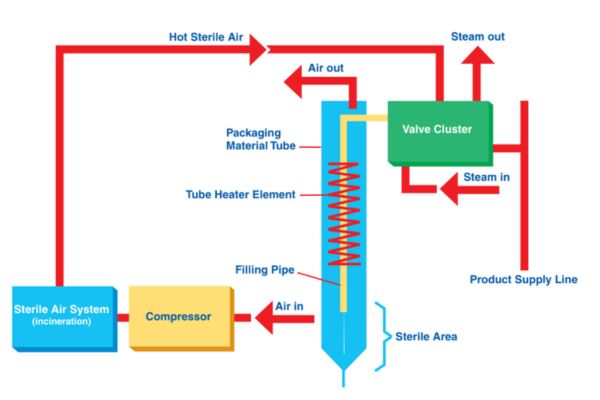
In some cases, the entire system or specific parts such as filling pipes, product supply lines, and product valves can be thermally sterilized, using hot steam and hot air. Here, a combination of steam and dry air at high temperatures is often used. Sterilization of filling pipes and filling areas requires dry air at a minimum temperature of 240°C for 30 minutes. To prevent contamination, there is a steam barrier created to separate aseptic filler from the product supply line. This steam barrier area as well as the product valve are sterilized by steam at a temperature of about 130°C.
Combination of heat and chemicals
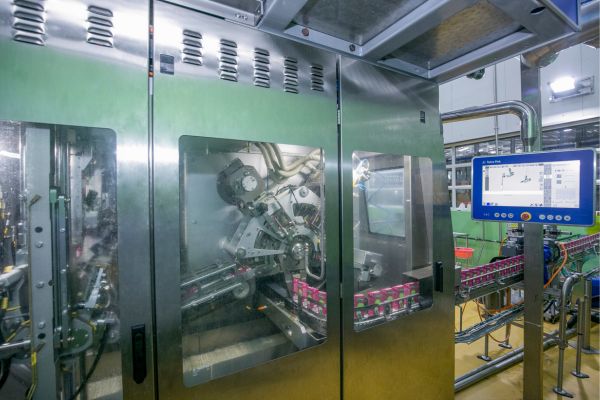
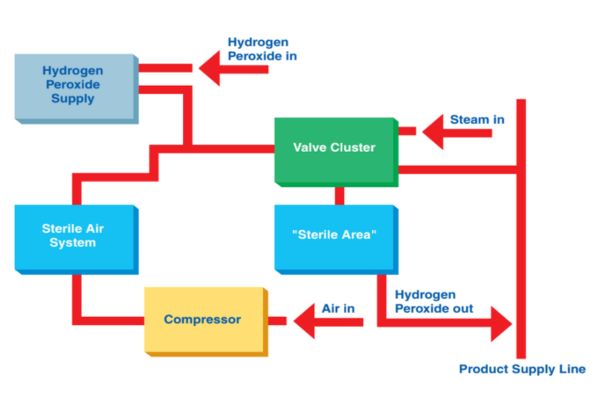
For more complex aseptic filling systems, sterilization requires a combination of heat and chemicals, as certain components such as form rings, and guiding rollers,… may not tolerate high temperatures. In these systems, a mix of heat and chemical sterilization can ensure thorough disinfection. Hydrogen peroxide (H2O2) is applied as a spray or vapor to sterilize surfaces. Sterilized hot air is simultaneously introduced to the system to reach the necessary temperature for the sterilization as well as to evaporate and remove excess H2O2 from the system.
Maintaining sterility during production
In most aseptic packaging systems, a positive pressure of sterile air is used to cover the area in which the containers are formed, filled, and sealed to prevent recontamination from non-sterile surroundings. Positive pressure means that the pressure in an aseptic system must be greater than the environment surrounding that system. The air may be sterilized either by filtration, incineration, or a combination of both.
For filtration, HEPA (high efficiency particulate air) filters are often used. HEPA filters are installed in air handling systems in Aseptic areas to remove airborne contaminants such as dust, microorganisms, and other particles. They capture particles as small as 0.3 microns with an efficiency of at least 99.97%, ensuring that the air entering the aseptic processing area is sterile.
In the incineration method, the specialized heating unit is strategically installed at the air source. The air passing through it is rapidly heated to 340°C or higher. This extremely high temperature is enough to destroy microorganisms present in the air. After sterilization, the hot air is cooled to be suitable for use in production environments. Once cooled, the sterilized air is delivered to a sterile environment, ensuring a contamination-free zone for operations such as filling, sealing and packaging.
Conclusion
Sterilization and environment control are the foundation of aseptic technology, creating a manufacturing process that ensures safety, quality and extended shelf life for a wide range of products. The choice of sterilization method depends on the specific characteristics and structures of each packaging and machine. The rigor of sterilization standards will ensure product quality and safety, as well as protect consumer health.
Read more about Aseptic technology:
About Future Generation Co., Ltd
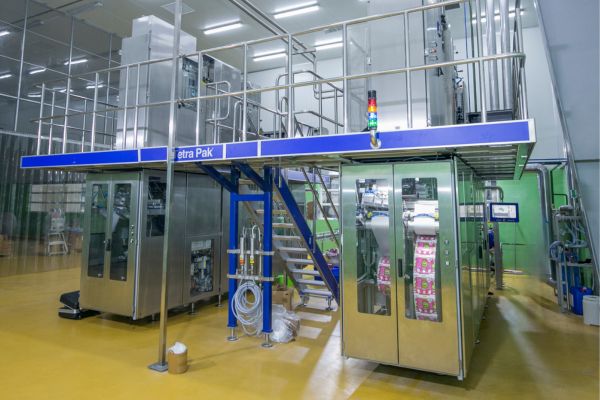
Future Generation Company Limited is one of the largest beverage suppliers in Vietnam, with 26 years of experience in production and export. FGC is equipped with modern machines such as Hotfill Krones and TetraPak Aseptic technology, ensuring high-capacity production. FGC strives to achieve our mission to become Vietnam’s leading healthy beverage company. Our factories also meet international standards such as ISO, HACCP, etc. In addition, we constantly innovate our machinery system, strengthen production capacity, and increase productivity.
FGC also provides Private Label Services. With this service, we can help customers research and formulate beverages, design product label packaging, and create their own brands. This is an ideal solution for small and medium enterprises. Moreover, FGC provides free samples for customers to test before bulk orders. We also ensure delivery as fast as possible.
Contact
Address: R4 building, Office Quarter 02, Royal City, 72A Nguyen Trai St., Thanh Xuan Dist., Hanoi.
Phone: +84 24 73 000 125/ +84 24 73 063 369
Mail: info@vietnam-tea.com
Website: https://oem-fgc.com/
Facebook: https://www.facebook.com/fgcvietnamtea
LinkedIn: https://www.linkedin.com/company/fgcvietnamtea/
Source: Tetra Pak