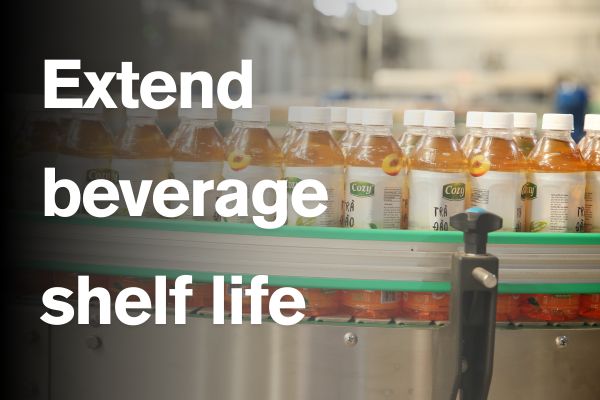
The beverage market is increasingly expanding with a variety of categories, flavors, and packaging. Each product has a different shelf life depending on the characteristics. How can manufacturers extend their shelf life?
Introduction
Beverage spoilage is often caused by bacterial growth, which requires specific conditions including pressure, light, oxygen, temperature, pH level, and water content. Therefore, manufacturers need to eliminate harmful bacteria and spoilage microorganisms to increase the shelf life of beverages. In this article, FGC will introduce 4 main ways to extend beverage shelf life, in terms of formulation adjustment, processing techniques, packaging optimization, and storage control.
1. Formulation adjustment
Adding preservatives
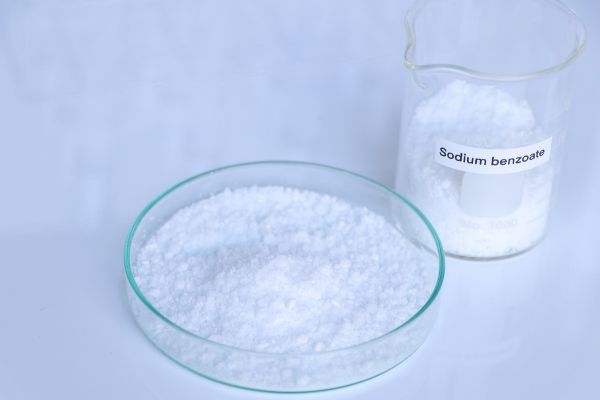
Preservatives are chemical additives added to beverages to increase their shelf life. They inhibit the growth of bacteria, yeasts, and molds, which can lead to beverage spoilage. To be used in a beverage, a preservative must go through a safety assessment and meet specific requirements, such as dosage and compatibility with other ingredients. Some preservatives allowed to be used include benzoates (like sodium benzoate), sorbates (like potassium sorbate), citric acid, and ascorbic acid.
However, preservatives are often a safety concern for many consumers. Therefore, to avoid any possible side effects of preservatives, at FGC, we produce preservative-free beverages using other methods, like UHT processing, Aseptic filling, and Hot filling. Thanks to the cutting-edge machinery equipped in our factories, our drinks can retain their quality for a long time without preservatives.
Raw material selection
The selection of raw materials also significantly affects the shelf life of beverages. Their initial quality, storage and handling conditions, microorganism presence, and sensory attributes can have some influence on the final drinks’ quality and shelf life.
2. Processing techniques
How the product is prepared and processed can significantly affect its shelf life. Cutting-edge technologies that eliminate and prevent the appearance of harmful bacteria can help avoid spoilage and extend shelf life.
Hot filling technology
Hot filling is one of the most common technologies in beverage production, which uses heat to kill bacteria. The drink is heated to 90°C to kill all bacteria and spores. Next, it is filled into bottles and capped immediately. The bottles are then inverted to let the hot liquid fully contact their inside surface and eliminate microorganisms. The required temperature throughout the process is above 82°C.
After this process, the bacteria inside the bottles are removed, while those outside cannot come in. As a result, the beverage is fully sterilized and can be kept at room temperature for a long time. Hot filling technology is often applied for acidic drinks with a pH level that is lower than 4.6. For beverages with higher pH levels, these temperatures might not be enough to kill all the bacterial spores.
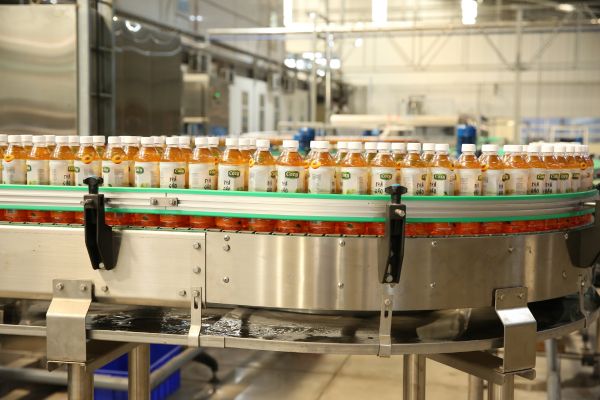
UHT treatment and Aseptic filling technology
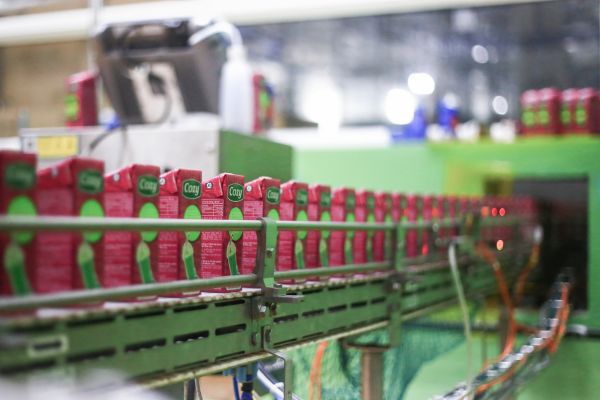
UHT (Ultra-high Temperature) technology is the treatment using very high temperatures (at least 135°C) in a short time to kill bacteria and spores. This method effectively eliminates harmful bacteria and spoilage microorganisms, extending the shelf life of final products. It is perfect for neutral drinks, like dairy products, and those with higher pH levels. Those beverages need more vigorous heat to kill the bacterial spores completely. The heating time is short, so it is ideal for continuous and mass production.
After the product is heated by UHT processing, it is rapidly cooled down to normal temperature, and packaged by Aseptic filling technology. Aseptic filling is the process of packaging sterilized products into sterilized containers in a sterile environment. The packaging and filling environment are pre-treated to ensure sterilized conditions, ensuring the product remains contamination-free throughout its packaging and storage. Therefore, a shelf-stable beverage can be kept at room temperature for longer by combining UHT treatment and Aseptic filling processes.
Cold filling technology
The cold filling process involves filling the product into containers at a cool temperature. The product and containers need to be sterilized separately before packing. This process will remove all bacteria and spoilage agents in the products, increasing the beverage’s shelf life. After that, the sealing process also needs to be conducted in a sterilized environment to avoid cross-contamination. Cold filling helps preserve taste, texture, and nutrients, especially those products sensitive to heat.
3. Packaging optimization
Optimizing packaging is also an effective way to extend the shelf life of beverages. Ideal packaging minimizes exposure to light, oxygen, and moisture to protect the products’ taste and flavor.
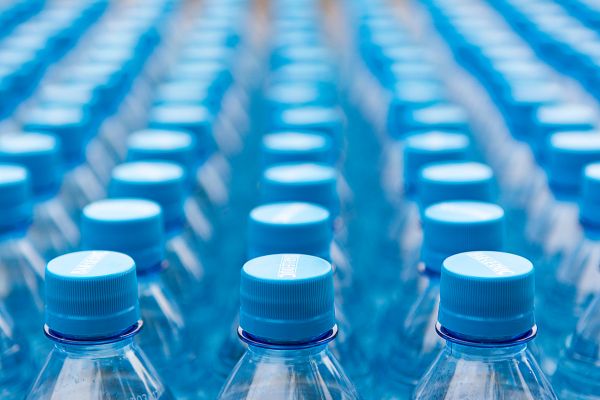
Firstly, choosing proper packaging materials for your drinks is crucial, based on beverage characteristics. Glass bottles have an excellent oxygen and moisture barrier, perfect for premium or sensitive beverages. Meanwhile, aluminum cans are outstanding in protecting against light and oxygen, suitable for carbonated drinks, energy drinks, and RTD teas. PET bottles also have good oxygen. TetraPak boxes with multi-layers of paperboard, foil, and plastic, often used for UHT beverages like milk, coconut drinks, and juices.
Moreover, manufacturers must ensure hermetic sealing to avoid breakage and exposure to the outside environment. Before sealing, they can use the MAP (Modified Atmosphere Packaging) method, which replaces the air in the bottles or cans with nitrogen or carbon dioxide. It can help avoid oxidation, maintain flavor and color, slow down spoilage, and increase shelf life.
4. Storage control
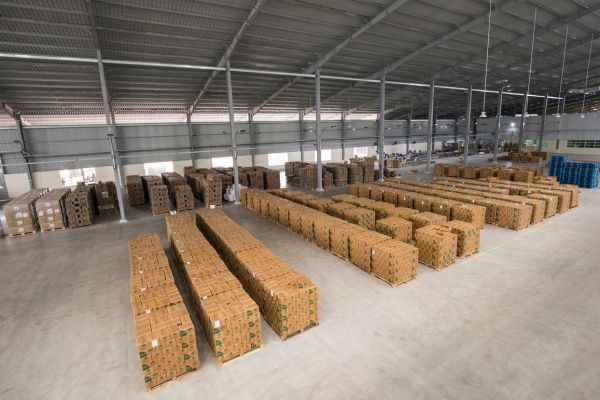
Beverages need to be stored properly before reaching the consumers to avoid spoiling and extend their shelf life. Appropriate storage temperature is crucial to maintain a product’s quality, taste, and flavor. Cold storage can considerably reduce spoiling in fresh or minimally processed drinks, such as juices and dairy products. In addition to temperature, it is necessary to control humidity and light conditions. Storing and transporting in dry and dark environments can help prevent spoilage and photo-degradation.
Conclusion
If you are looking for a way to increase the shelf life of beverages, you can consider adjusting formulation, choosing suitable processing techniques, optimizing packaging, and storage conditions. You can combine these factors to have more effective results. At FGC, we use high-quality materials and apply strict storage requirements. Besides, our factories are equipped with modern hot filling, UHT, and aseptic filling lines, extending beverage shelf life naturally without preservatives.
Explore ways to determine beverage shelf life:
About Future Generation Co.,Ltd
Future Generation Company Limited is one of the largest beverage suppliers in Vietnam, with over 30 years of experience in production and export. FGC is equipped with modern machines such as Hotfill PET and TetraPak, ensuring high-capacity production. FGC strives to achieve our mission to become Vietnam’s leading healthy beverage company. Our factories also meet international standards such as FSSC, ISO, HACCP, etc. In addition, we constantly innovate our machinery system, strengthen production capacity, and increase productivity.
FGC also provides Private Label Services. With this service, we can help customers in researching and formulating beverages, designing product label packaging, and creating their own brands. This is an ideal solution for small and medium enterprises. Moreover, FGC provides free samples for customers to test before bulk orders. We also ensure delivery as fast as possible.
Contact
Address: R4 building, Office Quarter 02, Royal City, 72A Nguyen Trai St., Thanh Xuan Dist., Hanoi.
Phone: +84 24 73 000 125/ +84 24 73 063 369
Mail: info@vietnam-tea.com
Website: https://oem-fgc.com/ – https://vietnam-tea.com/
Facebook: https://www.facebook.com/fgcvietnamtea